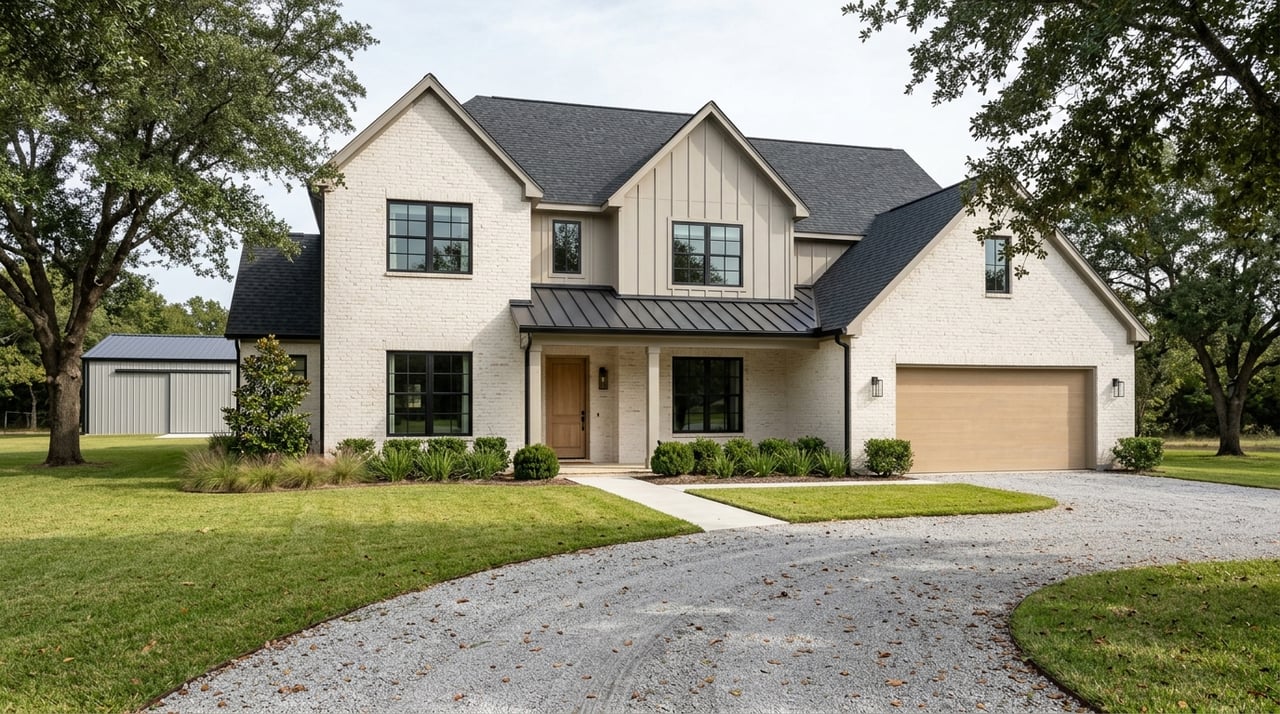
Wondering whether a home with extra land around Waller can be financed like a normal house? That is one of the most common questions buyers ask when they start looking at acreage properties. The good news is that extra land does not automatically create a financing problem, but the details matter. If you understand what lenders are really looking at, you can ask smarter questions, avoid surprises, and move forward with more confidence. Let’s dive in.
What lenders look for first
When you finance a home with land around Waller, the key issue usually is not the exact number of acres. Instead, lenders want to know whether the property still functions as a residential home.
According to Fannie Mae property eligibility guidance, the property must be residential in nature, suitable for year-round use, legally permitted or legal non-conforming, and served by utilities that meet community standards. Fannie Mae also states it will not purchase or securitize loans secured by agricultural-type properties, undeveloped land, or land-development properties.
That same general theme shows up in other loan programs. USDA single-family housing guidance requires the property to be predominantly residential and not used primarily for agricultural, farming, or commercial enterprise. VA farm loan facts also make clear that the benefit is for residential purposes, not to purchase a business.
Why acreage alone is not the whole story
A larger parcel does not automatically make a property ineligible. In many rural and semi-rural areas, including parts of the Waller area, homes with more land can still fit the local residential market.
Fannie Mae notes in its site analysis appraisal guidance that the appraiser must use the actual site size, not a hypothetical smaller piece of the parcel. For rural or relatively undeveloped properties, the lender should focus on the site characteristics, zoning, current land use, and comparable sales to decide whether the property is typical for the neighborhood.
That means the real question is whether the home and land look like a normal residential property for that part of the market. If the parcel is much larger than nearby comparable sales, the lender may need a stronger explanation that it still fits residential demand.
The appraisal can make or break the deal
For homes with land, the appraisal often becomes one of the most important parts of the financing process. The appraiser is not just valuing the house itself. They are also looking at whether the site size, layout, and features make sense for a residential property.
Fannie Mae says in its neighborhood appraisal guidance that lenders should evaluate comparable sales and consider whether similar properties in the area are sold primarily for residential use. VA follows a similar approach for acreage properties, focusing on whether similar properties were recently sold as homes rather than as business or agricultural properties.
FHA also pays close attention to land issues. In HUD's appraisal reporting instructions, appraisers are directed to report site size and consider excess or surplus land. So even when FHA is an option, the parcel still needs to be marketable as residential real estate.
Questions to ask about property use
One of the fastest ways to spot a financing issue is to ask how the property is actually being used. A home on acreage may still qualify easily if it is clearly residential, but financing can get more complicated if the land or improvements start to resemble a business or farm operation.
Ask your lender these questions early:
- Is this property being treated as a standard residential home with land, or as a special-case property?
- Are any parts of the property used for farming, storage, rental, or a home-based business?
- Would a barn, workshop, guest house, or detached space affect eligibility?
- Is the value based strictly on the residential use of the property?
This matters because Fannie Mae's mixed-use property rules only allow certain mixed-use situations. The property must still be a one-unit principal residence, primarily residential in nature, and the business use cannot hurt residential marketability.
Ask how outbuildings will be classified
Homes around Waller sometimes include extra structures like barns, workshops, storage buildings, guest quarters, or second living spaces. These features are not automatically disqualifying, but lenders will want to know what they are and how they are used.
For example, Fannie Mae special property guidance allows limited non-residential improvements in some cases. USDA may allow storage sheds and non-commercial workshops, but barns, silos, or livestock facilities used primarily for agricultural or commercial enterprise are ineligible.
VA can be more flexible for residential acreage properties. It may allow barns, sheds, corrals, stables, and pastures when similar local properties are sold primarily for residential use, though the value cannot include livestock, crops, or farm equipment, according to the VA farm loan fact sheet.
Watch for ADU and second-unit questions
If the property includes a guest house, garage apartment, or detached living space, ask whether it will be treated as an accessory dwelling unit, also called an ADU, or as a second unit. That distinction can affect both financing and qualification.
Fannie Mae's special eligibility rules treat a one-unit principal residence with an ADU as a one-unit property. However, rental income from an existing ADU can only be used under limited conditions.
This is an area where buyers can get tripped up if they assume a flexible living space automatically helps them qualify. Before you make an offer, ask your lender whether any rental income can be counted and how the appraiser is likely to classify the structure.
Utilities, roads, and access matter more than many buyers expect
A beautiful house on land still has to meet practical lending standards. In many acreage transactions, access and utilities become major underwriting questions.
Fannie Mae requires utilities that meet community standards. Its site guidance states that if public water or sewer is unavailable, private or community well and septic systems must be viable and may need legally binding access and maintenance arrangements.
USDA also requires an all-weather road and acceptable water and wastewater systems. If a road is privately maintained, USDA requires a legally enforceable maintenance agreement, as outlined in its Single Family Housing Guaranteed Loan Program overview.
Before you get too far, ask whether the property may require:
- A survey
- Easement review
- Well inspection or review
- Septic review
- Private road maintenance documentation
Multiple parcels can add complexity
Some homes with land near Waller include more than one legal parcel. That does not always create a problem, but it does need careful review.
Under Fannie Mae special property eligibility considerations, the mortgage generally must cover each parcel, and the parcels must be conveyed in full and have the same basic zoning. USDA has similar expectations for financed property to be conveyed as part of the residential transaction.
If you are considering a property with split parcels, ask your lender and title team one simple question: Can everything be financed together under one mortgage as structured today? That answer can save you time and help you avoid contract surprises.
Loan programs to compare
Not every financing path fits every acreage property. The right loan option depends on how the home is used, how typical it is for the area, and how the appraisal is likely to come in.
Here is a simple comparison to discuss with your lender:
| Loan type | Best fit | Main watch-outs |
|---|---|---|
| Conventional | Residential home with land that appraises as typical for the area | Large acreage, mixed use, multiple parcels, ADUs |
| USDA | Eligible borrowers buying a predominantly residential property, often with no down payment | Property cannot be income-producing, and address eligibility should be verified |
| VA | Primary residence on land, including some acreage-heavy properties | Cannot be primarily for business use |
| FHA | Residential property where appraisal supports site size and marketability | Excess or surplus land may require closer review |
For USDA, do not assume a general area qualifies. Buyers should verify the exact address using USDA's eligibility resources for the guaranteed loan program.
Smart lender questions before you write an offer
If you are serious about a home with land around Waller, bring these questions to your lender before you submit an offer:
- Which loan programs are realistic for this specific property: conventional, FHA, USDA, or VA?
- How will the appraiser compare this property to nearby sales?
- Are there enough comparable homes with similar acreage?
- Will the extra structures be treated as accessory improvements, an ADU, or a second unit?
- Does anything about the property suggest agricultural, commercial, or mixed-use concerns?
- Do we need documents for easements, private road maintenance, well, septic, or surveys?
- If there are multiple parcels, can they all be included in the same mortgage?
- If there is rental income from an ADU or separate space, can it be used to qualify?
These questions can help you separate a manageable financing path from a property that may need more specialized review.
The bottom line for Waller-area buyers
If you are shopping for a home with land around Waller, the main takeaway is simple: extra land is often financeable when the property still looks and functions like a residential home. Financing becomes more complex when the property starts to resemble a farm, a business, or a parcel that is far outside local residential norms.
That does not mean you should avoid acreage properties. It means you should evaluate them with the right team, the right lender, and the right questions from the start.
If you want guidance as you compare homes with land around Waller, Devyn Winkler can help you evaluate the property details, spot potential financing hurdles early, and move through the process with a clear plan.
FAQs
What does financing a home with land around Waller usually depend on?
- It usually depends on whether the property is considered residential in nature, suitable for year-round use, and typical for the local residential market rather than primarily agricultural or commercial.
Can you get a conventional loan on a house with acreage in Waller?
- Yes, in many cases you can, especially when the property appraises as a typical residential home with land and the acreage is supported by comparable sales.
Does USDA financing work for homes with land near Waller?
- USDA can work for eligible borrowers and eligible properties, but the home must be predominantly residential, cannot be primarily income-producing, and the exact address should be verified through USDA eligibility tools.
Can a barn or workshop affect financing on a Waller-area property?
- Yes, it can. The lender and appraiser may review whether the structure is an acceptable accessory improvement or whether it suggests agricultural, commercial, or mixed-use use.
Do multiple parcels make financing harder for homes around Waller?
- They can add complexity because the lender may require all parcels to be conveyed together and covered by the same mortgage, with consistent zoning and clear documentation.
Can rental income from an ADU help you qualify for a home with land?
- Sometimes, but only under limited conditions. You should ask your lender how the space will be classified and whether any income can be used for qualification.